
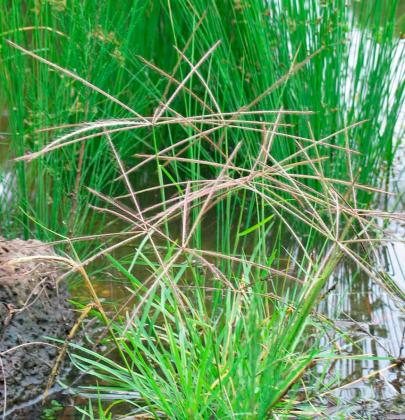
Windmill Grass
Chloris truncata
Tufted low growing grass to 45 cm tall. Small flat or loosely folded pale green leaves. An umbrella-like flowerhead up to 30 cm wide, purple to black. The seedhead has 5-13 spikes radiating like blades of a windmill from the stem. The seeds have a distinct bristles or awns to 15 mm long.
| Details | |
|---|---|
| Flora Type | Grasses |
| Distinctive Features | When mature the entire seed head breaks away and tumbles along in the wind. |
| Biology | Annual or short-lived perennial. Sandy soils and clay loams. Typically found in well-watered sites in grasslands and woodlands, often as a dominant understorey species. Also disturbed places and drainage lines. A useful grass for soil conservation purposes. An important native pasture grass in some areas of Australia, but weedy in others. |
| Flowering Time | Nov-Jun |
| Taxonomy | |
|---|---|
| Phylum | Tracheophyta (Vascular Plants) |
| Class | Magnoliopsida (Flowering Plants) |
| Order | Poales |
| Family | Poaceae |
| Genus | Chloris |
| Species | truncata |
Very valuable warm-season grass. Can increase its dominance under moderate grazing regimes - young growth is grazed by livestock. Killed by severe frost.
| Interesting Facts | |
|---|---|
| Similar Species | Similar flowers to Curly Windmill-grass Enteropogon ramosus but the seed shape is different in the two closely related species. |