Centaury
Centaurium erythraea
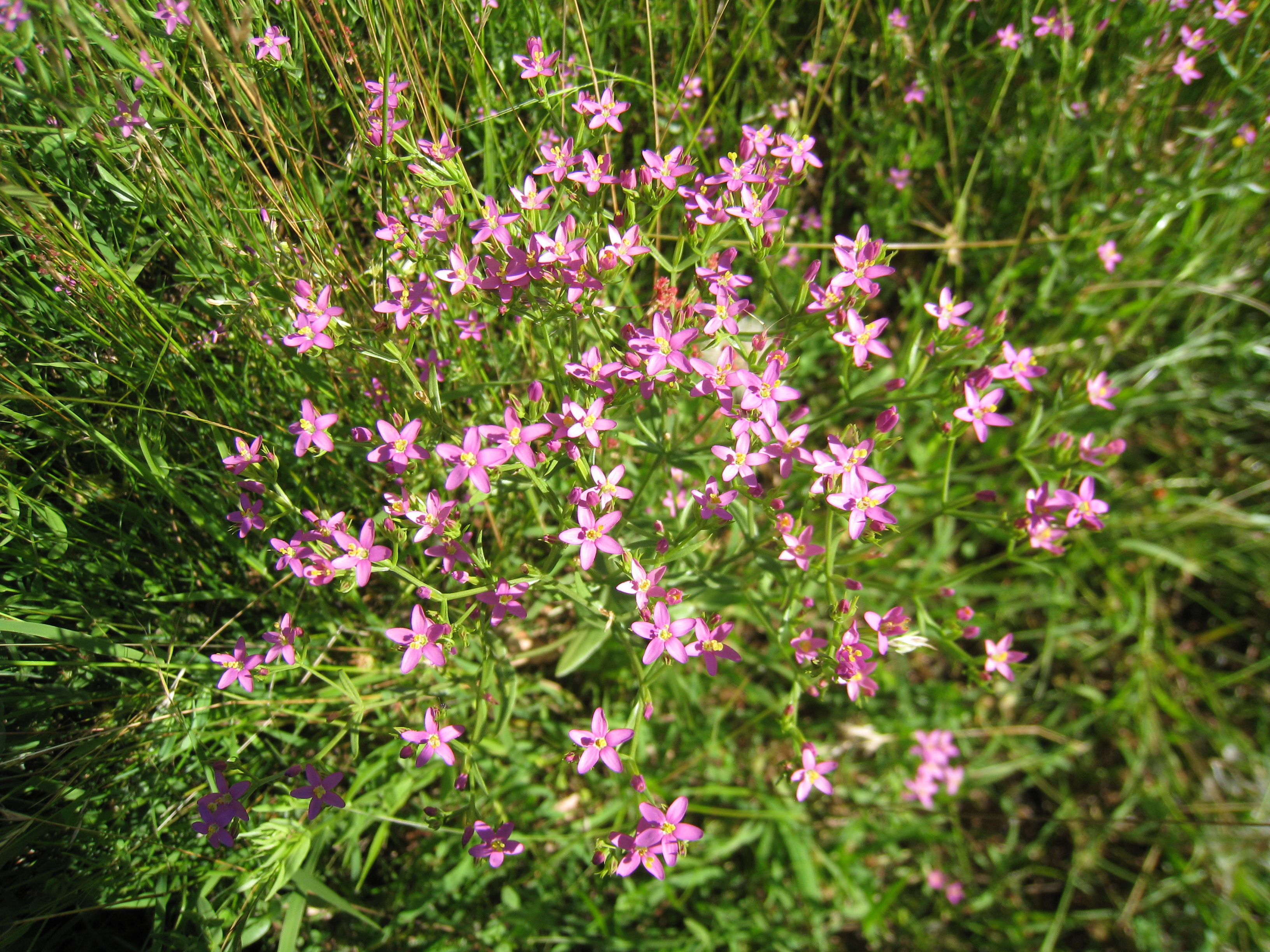
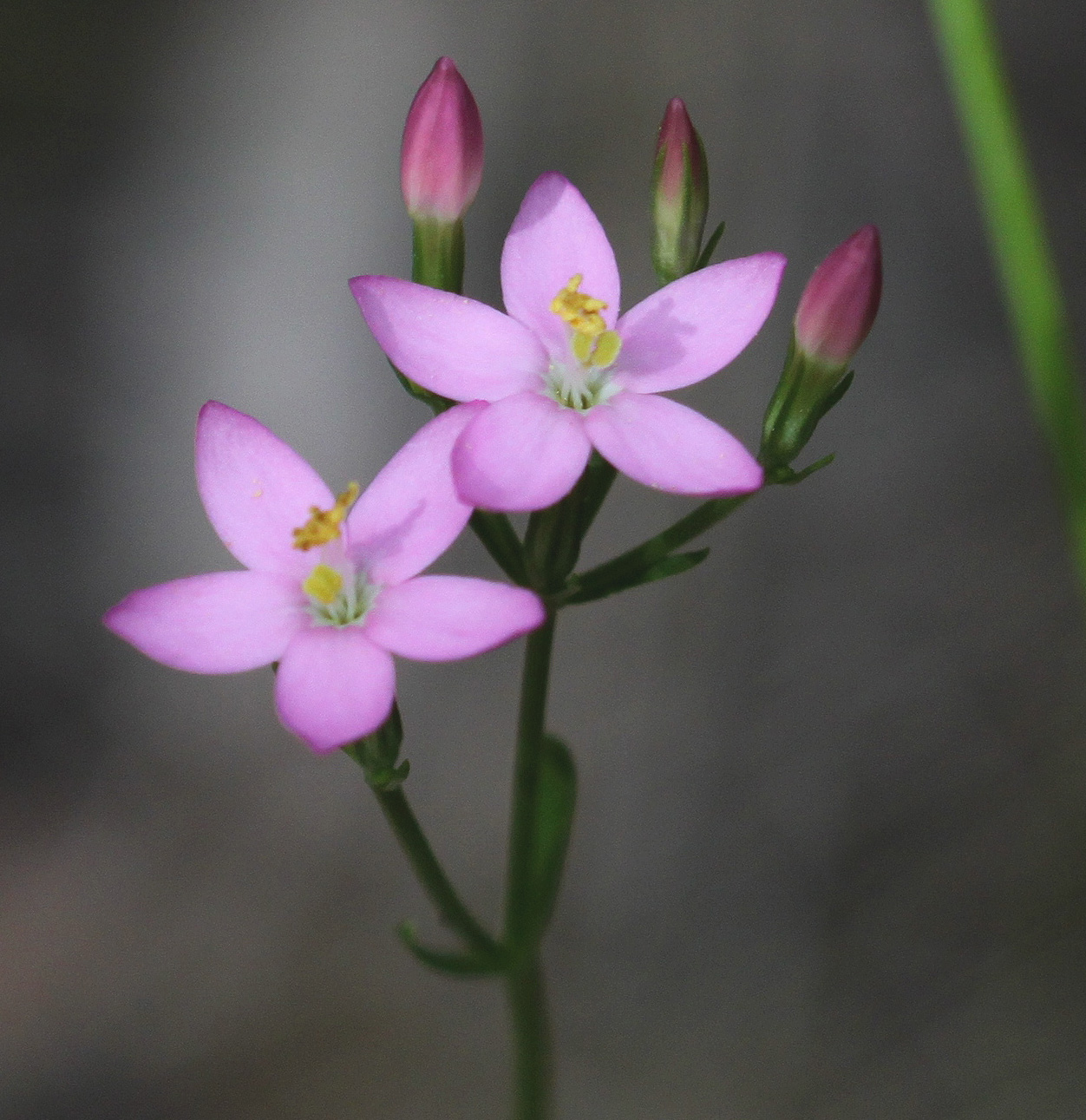
Biennial herb to 50 cm high. Erect leafy stem often much-branching towards top, arising from small persistent rosette. Triangular leaves arranged oppositely to 4 cm long, decreasing in size up the stem. Multiple flat-faced flowers about 1 cm across, five pinkish-lavender petals, on stalks from stem and tangling with leaves. Fruit a cylindrical capsule.
| Details | |
|---|---|
| Flora Type | Herbs |
| Other Common Names | Common Centaury |
| Distinctive Features | Erect herb with rosy five-petalled flowers that open only in fine weather and not after mid-day. |
| Biology | Naturalised through eastern Australia. Widespread, especially in pastures. Listed as threatened in Tas. |
| Native Status | Introduced |
| Flowering Time | Throughout year |
| Taxonomy | |
|---|---|
| Phylum | Tracheophyta (Vascular Plants) |
| Class | Magnoliopsida (Flowering Plants) |
| Order | Gentianales |
| Family | Gentianaceae |
| Genus | Centaurium |
| Species | erythraea |
Prepared as medicinal tea for patients with gastric and liver diseases. A powerful antioxidant. The Aboriginal people in Tasmania used the leaves of Centurium spicatum for treatment of bilious headaches and haemorrhoids.
| Interesting Facts | |
|---|---|
| Similar Species | Similar to the native Schenkia australis (previously Centaurium australe) and many exmples of C. erythraea may actually be the native species. |
| Native Status | Introduced |