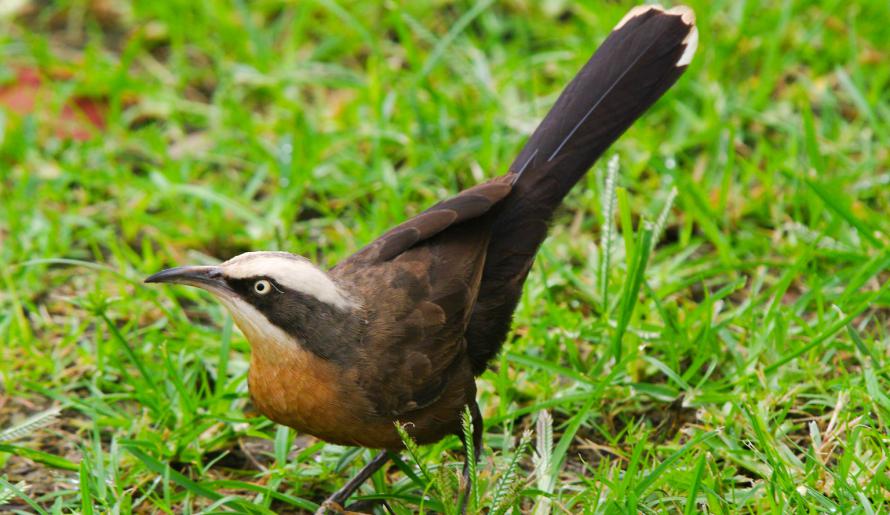
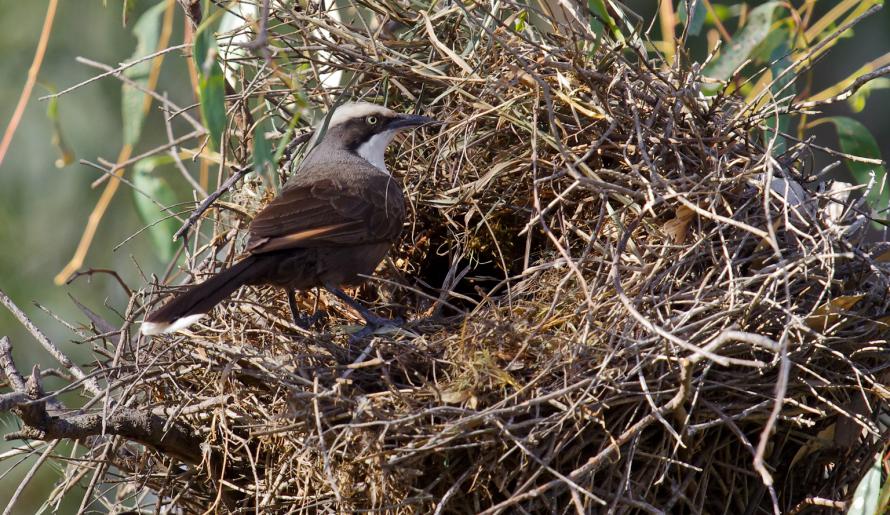
Grey-crowned Babbler
Pomatostomus temporalis
| Details | |
|---|---|
| Type | Bird |
| Group | |
| Biology | Breeding season: July to February. Clutch size is two to three. They live and breed in co-operative territorial groups of two to fifteen birds. Groups usually have a primary breeding pair along with several non-breeding birds. They help to build the nest (females do most of the building). Two types of nests are built: roost-nests (usually larger and used by the whole group) and brood-nests (for the breeding females). The large domed nests are placed in a tree fork 4-7 m high, made of thick sticks with projections that make a hood and landing platform for the entrance tunnel. Nest chamber is lined with soft grass, bark, wool and feathers. |
| Distinctive Markings | Grey crown stripe and a dark face mask that contrasts with a white eyebrow. |
| Taxonomy | |
|---|---|
| Phylum | Chordata |
| Class | Aves |
| Order | Passeriformes |
| Family | Pomatostomidae |
| Genus | Pomatostomus |
| Species | temporalis |
The old nests of Grey-crowned Babblers are used by a variety of other birds. Blue-faced Honeyeaters sometimes nest on top of the dome. In south-east Melbourne, small populations survive on golf courses.
| Interesting Facts | |
|---|---|
| Diet | Omnivore. Feeds on insects and other invertebrates and sometimes eat seeds. |
| Habitat | Found in open forests and woodlands, favouring inland plains with an open shrub layer, little ground cover and plenty of fallen timber and leaf litter. May be seen along roadsides. |
| Native Status | Native to Australia |