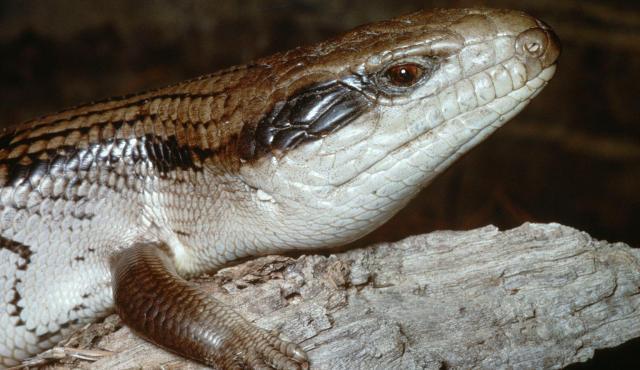
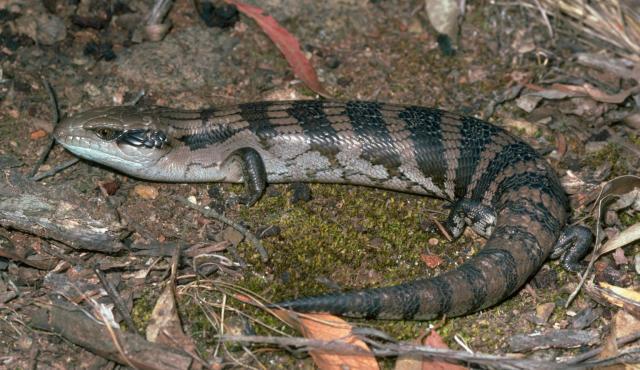
Common Blue-tongue Lizard
Tiliqua scincoides
| Details | |
|---|---|
| Type | Reptile |
| Group | |
| Other Common Names | Common Blue-tongued Skink, Eastern Blue-tongue, Tongued Lizard |
| Biology | Lives alone for most of the year. Viviparous (live young). Females produce up to 25 live young which are self sufficient and disperse after a few days. Possess a Jacobson's Organ on the roof of the mouth which is used to detect chemicals emitted from prey. |
| Distinctive Markings | Bright, blue, fleshy tongue used to scare away predators. Seven to ten dark bands across the body. |
| Taxonomy | |
|---|---|
| Phylum | Chordata |
| Class | Reptilia |
| Order | Squamata |
| Family | Scincidae |
| Genus | Tiliqua |
| Species | scincoides |
The blue tongue is used as a bluff-warning to potential predators.
| Interesting Facts | |
|---|---|
| Diet | Omnivore. Feeds on plant and animal material including snails, beetles, wildflowers, native fruits and berries. |
| Habitat | Basalt plains west of Melbourne and the Mornington Peninsula, including urban areas. |
| Native Status | Native to Australia |